
Lake Jackson, TX · Garage Door Service
Openers and Power Outages in Lake Jackson Homes
Lake Jackson houses built mostly 1970-1990 run older chain-drive openers that struggle with occasional freezes and power outages. Here's what that means for your door.
- Repairs & new doors
- Springs & openers
- Serving 5 nearby communities
The Problem
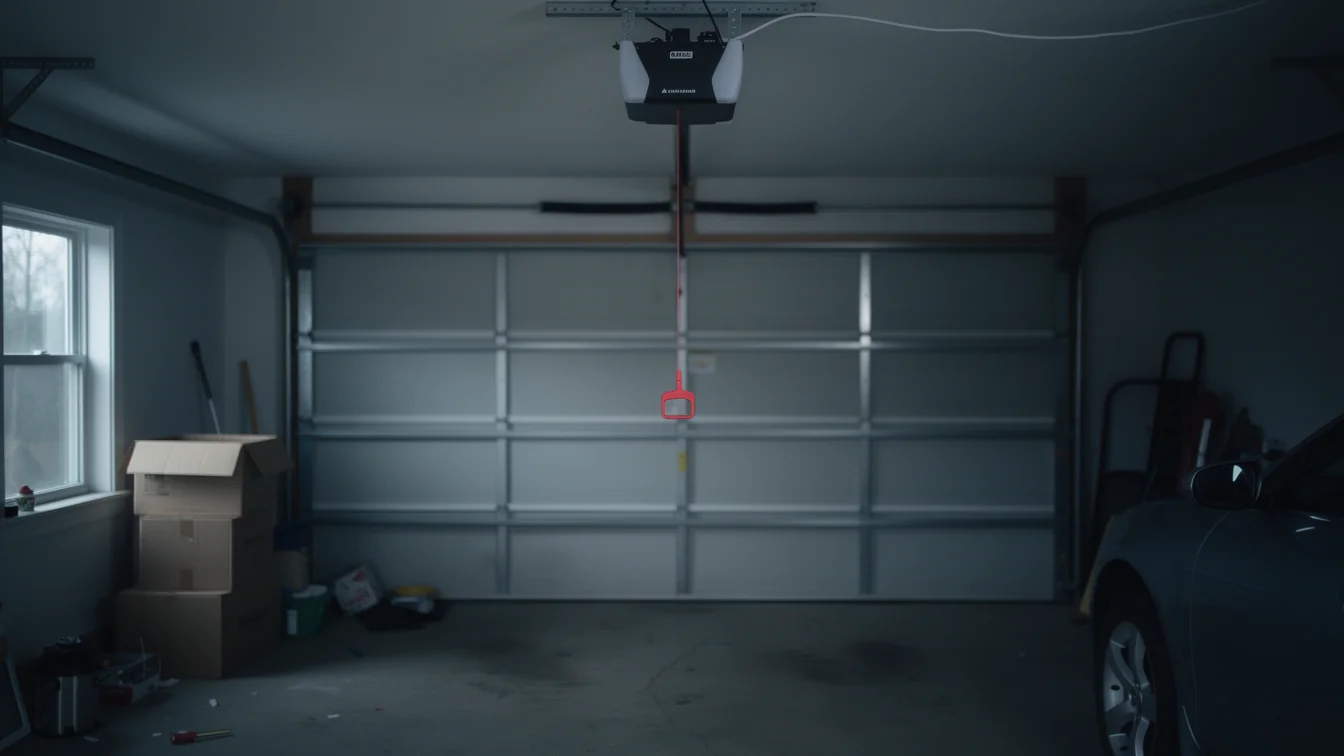
Most houses in this area went up between 1970 and 1990, with the median landing around 1981. That means a lot of garage openers out there are either original to the house or a first-generation replacement from the 90s - chain-drive units with a light-duty capacitor and no battery backup built in. When the power drops, even for a few minutes, these openers don't fail gracefully. The motor stops mid-cycle, the door sits half up or half down, and there's no backup kicking in to finish the job. Homeowners in the 12 named areas across this service region deal with the same basic setup: an opener old enough to have outlived its warranty, wired straight to house power, with a manual release cord that's been pulled maybe twice since it was installed. That's not a flaw in any one house. It's what you get when a town's housing stock clusters in a twenty-year window and the openers inside it age together. The problem isn't that these units are bad - many still run fine day to day. It's that a power outage exposes exactly how little margin they have.
How Local Conditions Play In
This area sits in a mild climate band with occasional freeze days, not the hard winters that force openers to deal with ice buildup on tracks for weeks at a time. That's good news for the mechanics - less thermal cycling on rollers and hinges than you'd see further north. But a mild climate with occasional freezes still means a handful of nights a year when temperatures drop enough to stiffen grease on an older chain-drive opener's rail, slow the carriage, and trip a safety sensor that reads the slower travel as an obstruction. Pair that with a cold front that also knocks out power to part of the grid, and you get the two failures at once: the opener won't finish its cycle on battery because there isn't one, and even if power comes back, the unit may need a manual reset before it'll respond to the remote again. None of this is dramatic weather. It's a few degrees below what these openers were tuned for, landing on houses where the opener itself is older than the warranty ever expected it to run.
What You Pay
Median household income across this service area runs around $70,258, with roughly 12,505 owner-occupied houses among 23,649 households total. That's a market where a straight opener swap tends to make more financial sense than patching an aging unit piece by piece - a new motor head, a new sensor, and a service call to diagnose a dying capacitor can add up past a battery-backup opener that solves the power-cut problem outright. I won't quote a number here because it depends on what you're replacing and whether your rail and mounting need work too, but the math usually favors replacement once a chain-drive unit from the 80s or 90s starts needing its second repair. I'll say the honest part up front: if your opener is original to a house built in that 1970-1990 window, I'm not going to talk you into a fourth repair visit. At some point the labor costs more than the part is worth.
What Changes With the Season
Through the stretch of the year when nights dip toward freezing, older openers in this area show their age first - slower travel, a sensor that reads cold-stiffened chain tension as resistance, a remote that needs a second press. That's also when short power outages are most likely, since cold fronts here tend to bring the wind and grid strain that trip outages even in a climate this mild. The rest of the year, these same openers run fine and owners forget the issue exists until the next front rolls through. If your house falls in that common 1970-1990 build range and the opener's never been swapped, the pattern repeats every year: fine for months, then a cold night and a flicker of the lights turns into a door stuck at the halfway mark. A battery-backup unit breaks that cycle. Nothing about the motor or the house changes - it's the one part of the system built for the day the power actually goes out.
Frequently asked questions
Why does my opener stop working during a short power outage?
Most openers in homes built in this area's common 1970-1990 range don't have battery backup - they're wired straight to house power with no fallback. When the power outages, even briefly, the motor stops wherever it was in the cycle and won't resume until power's back and the unit is reset, sometimes manually at the head unit itself.
Does the occasional freeze around here actually affect my garage door opener?
This area sits in a mild climate band, but the handful of freeze nights each year can stiffen grease on an older chain-drive rail enough to slow carriage travel. On an aging opener, that slower movement sometimes trips the safety sensor and stops the door mid-cycle, which reads like a malfunction but is really just cold grease.
Is it worth repairing an opener from the 1980s or should I replace it?
Depends on what's failing. One bad sensor or capacitor, a repair's fine. But once an opener from that era needs a second or third service call, the labor on patch repairs usually outruns the cost of a new battery-backup unit - which also solves the power-cut problem the old one never addressed.
Related garage door services in Lake Jackson
More garage door guides
Book garage door service in Lake Jackson
Call now or request a quote - tell us what the door is doing and where you are.