
Lake Jackson, TX · Garage Door Service
Garage Doors in Lake Jackson: What Actually Breaks and Why
Garage door help for Lake Jackson homes built mostly 1970-1990, where original hardware and the occasional cold snap cause the same predictable breakdowns.
- Repairs & new doors
- Springs & openers
- Serving 5 nearby communities
The Problem
Most houses in Lake Jackson and the surrounding area went up between 1970 and 1990, with the median build year landing around 1981. That's not a small detail. A door installed when the house was built, or an opener added in the 90s, is now 30 to 50 years old if nobody's touched it. Torsion springs rated for a certain number of cycles have usually used them up by now, and the steel on older sectional doors has gone through decades of humidity swings without a repaint or reseal.
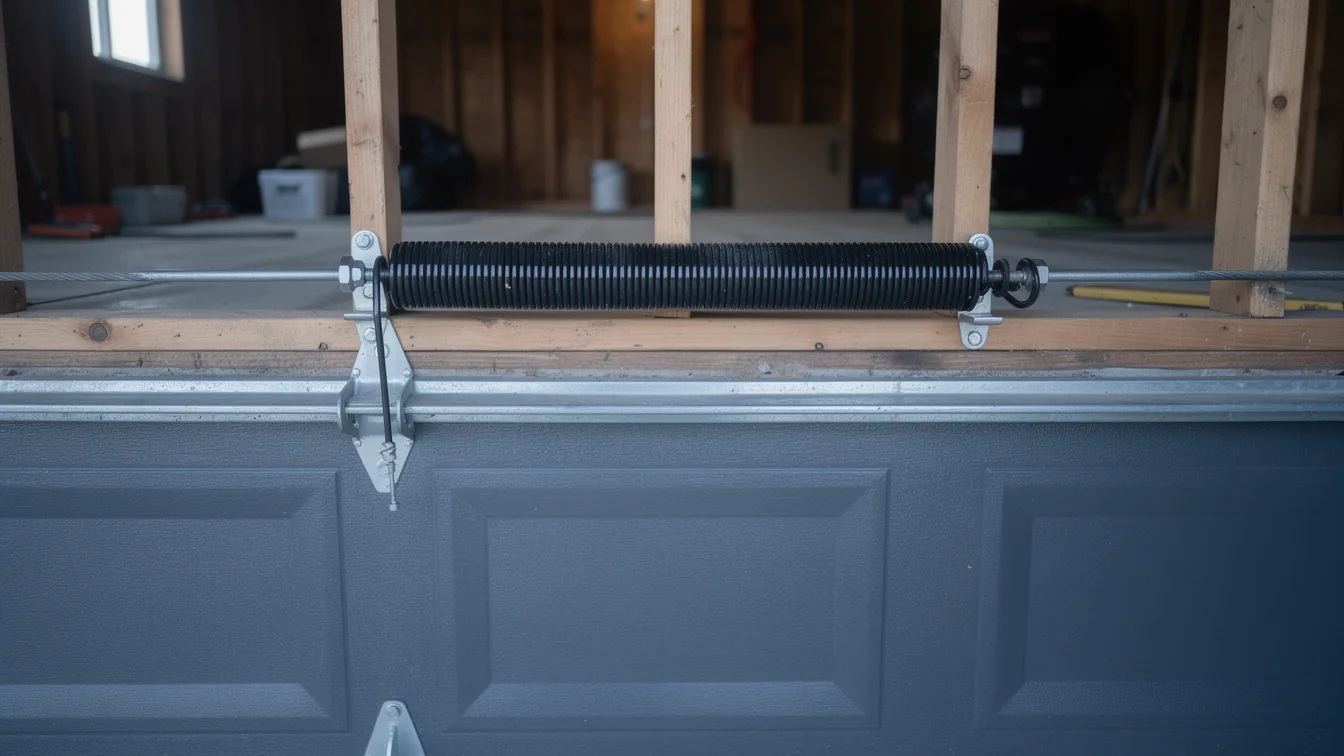
Across the 12 named areas that make up this stretch of Brazoria County, the housing stock runs similar: 1980s and 90s construction, single or two-car garages, torsion spring setups rather than the newer extension-spring-on-a-bracket style you see in post-2000 builds. That means the failure pattern is consistent house to house - a spring that's been wound and unwound for forty years, a cable fraying at the drum, rollers that were steel from day one and never swapped for nylon.
The honest limitation here: if your opener is original to a house built in the 1970s, repairing it usually isn't worth the labor. Parts for that era are getting hard to source, and a new opener runs quieter and safer for less than what a rebuild costs in time.
How Local Conditions Play In
Lake Jackson sits in a mild climate band with occasional freeze risk - not the hard freezes of further north, but enough cold mornings each winter to matter. Garage door steel contracts in cold, and the grease in an old torsion spring thickens. That combination is exactly when a spring that's been weakening for years finally lets go. It's not the cold that breaks the spring; it's the cold that finishes the job the other 364 days started.
Humidity is the other piece. This area doesn't get hard freezes often, but it does get sustained damp air most of the year, and that works on steel tracks and non-galvanized hardware slowly. On houses from the 1981 median build year, original track brackets have usually seen forty-plus years of that cycle - expansion in heat, slight contraction on the rare cold snap, repeat. You see it most as surface rust at the bottom bracket, where water collects, or as a track that's gone slightly out of alignment because the wood jamb it's screwed to has moved with the seasons.
If your garage faces away from direct sun for most of the day, moisture sits on the door skin longer after rain, which speeds up any rust that's already started at seam edges on older steel doors.
What You Pay
I can't give you a number here without making one up, and a made-up number is worse than none. What I can tell you is what drives the cost on a house like the ones common in this area: a torsion spring job on a door from the 1970-1990 build era usually costs less than full opener replacement, because the opener is doing more work electronically - circuit board, logic, safety sensors - while the spring is just a piece of wound steel.
Median household income across this service area runs around $70,258, and most jobs here are either a spring repair, a cable replacement, or an opener swap rather than a full door replacement - the doors themselves, even forty years old, are often structurally fine if the panels haven't rusted through. Replacing a whole door costs more than fixing what's actually broken, and on most of the houses out here, the door skin is the part that's held up best.
Get a specific quote for your situation rather than relying on a general figure - too much depends on what's actually failed and what size door you've got.
What Changes With the Season
Because this area sits in a mild band with only occasional freezes, you don't need the extreme cold-weather prep that colder regions do - no need to worry about a spring snapping from deep freeze the way it might further north. But the few cold mornings each winter are worth paying attention to, because they're when an already-weak spring is most likely to fail, and because a garage that's been warm for months doesn't flex well on the one morning it drops near freezing.
The rest of the year, the concern shifts to humidity rather than cold. Summer in this part of Brazoria County means long stretches of damp heat, and that's when lubricant on tracks and hinges breaks down fastest, and when wood-framed garage openings on older houses can swell slightly, tightening against the door and making the opener strain harder than it should.
A reasonable rhythm for houses built in the 1970-1990 window: check spring tension and lubricate hardware before the first real cold snap each year, and again mid-summer when humidity peaks. That's two visits, not twelve, and it catches most of what actually fails on houses this age.
Frequently asked questions
Why did my spring break on a cold morning?
Cold steel is less flexible, and grease inside the spring coil thickens in the cold, adding resistance right as the door tries to lift. On a spring that's already fatigued from decades of cycles - common on houses built in the 1970-1990 era here - a cold morning is often the final straw rather than the cause.
Is my door old enough to need replacing instead of repairing?
Not necessarily. Many doors from this area's 1980s-90s housing stock have steel skins that are still structurally sound even after 40 years; what usually fails first is the spring, cable, or opener, not the door panel itself. Rust-through at the bottom panel is the main sign the door itself is done.
Does the humidity here cause rust on garage hardware?
Yes, slowly. This area doesn't see many hard freezes, but sustained humidity most of the year works on unprotected steel brackets and tracks over decades. On original hardware from houses built around 1981, surface rust at the bottom bracket is common and worth checking before it spreads.
Related garage door services in Lake Jackson
More garage door guides
Book garage door service in Lake Jackson
Call now or request a quote - tell us what the door is doing and where you are.