
Lake Jackson, TX · Garage Door Service
Deciding Whether Your Old Door Is Worth Saving
A look at when a 1970s-90s Lake Jackson garage door is worth repairing versus replacing, based on the area's housing age, hardware era, and mild Gulf coast climate.
- Repairs & new doors
- Springs & openers
- Serving 5 nearby communities
The Problem
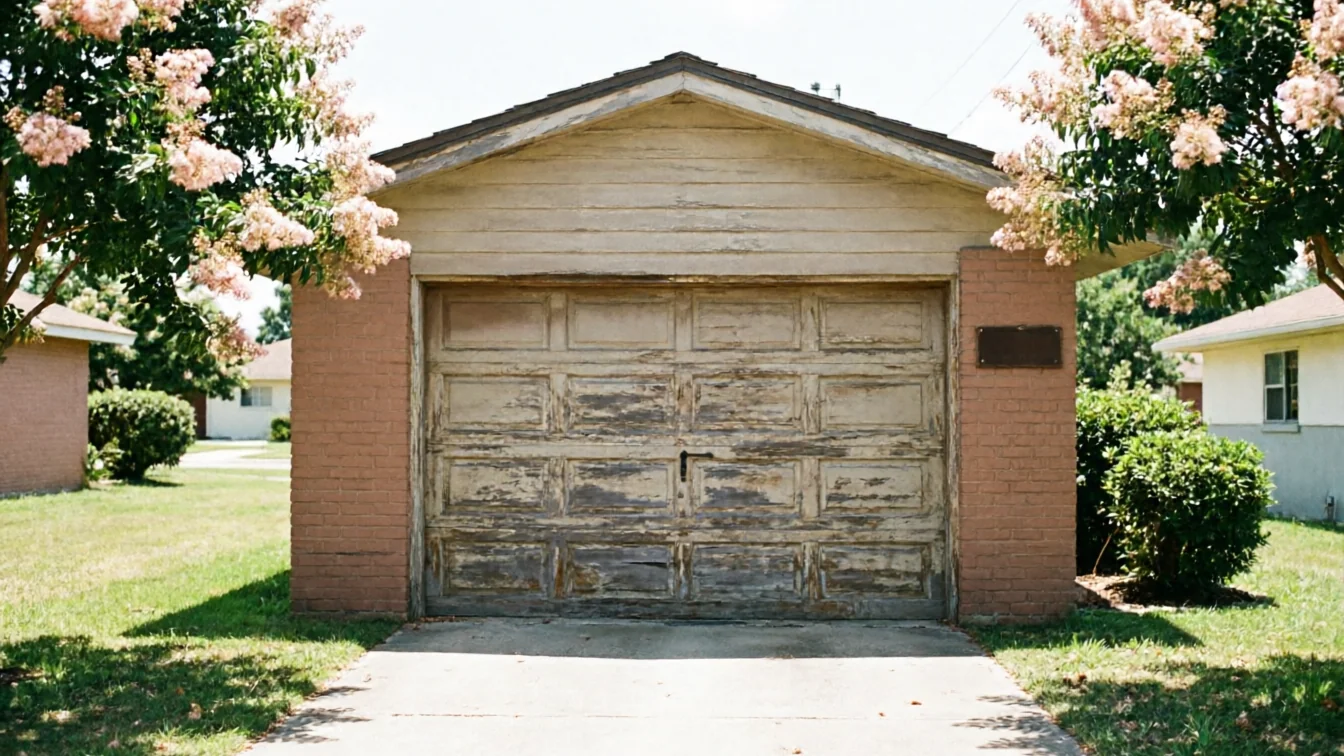
Most of the houses in Lake Jackson and the surrounding service area went up between 1970 and 1990, with the median sitting around 1981. That means the garage door hanging on a lot of these homes isn't the original owner's problem anymore - it's whoever bought the house twenty years later, looking at hardware that's older than they realized when they signed the papers.
Across the twelve named areas we cover, the stock runs heavy toward 1980s and 90s construction, which means a lot of extension-spring setups and steel sections built to a spec nobody makes anymore in the exact gauge or panel height. The track brackets rust at the same rate, the rollers wear out at the same mileage, and the opener - if it's even the original - is usually the second or third one installed since the house was framed.
The question we get isn't "what's wrong with my door." It's "is this thing worth fixing or should I just replace it." The honest answer depends on what's actually failed and how much of the door around it is still sound. A cracked panel on an otherwise solid torsion system is a different job than a door where the track, the spring, and the opener are all original and all tired at once.
How Local Conditions Play In
Lake Jackson sits in a mild climate with occasional freeze events - not the kind of cold that cracks concrete, but enough to stiffen spring lubricant overnight and make a cable that's been fraying for months finally let go on the first cold morning of the stretch. That's a pattern we see on older doors specifically: the failure doesn't happen in July, it happens the week the temperature drops.
Humidity does the slower damage. Steel sections and track hardware built in the 1980s weren't always galvanized the way current stock is, so rust works its way into hinges and roller stems over decades of Gulf coast moisture, even without a hard freeze to trigger anything. By the time a homeowner notices the door's gotten loud or crooked, the corrosion's usually been building for years.
This matters for the fix-or-replace call. A spring that's failed from age and cold is a straightforward swap. A track that's rusted through at the bracket, or a bottom panel that's absorbed enough moisture to start delaminating, is a different conversation - because you're not just replacing a part, you're fighting a material that's already compromised. On a door old enough to be original to a 1981-median house, that's worth checking before you spend money on a repair that won't hold.
What You Pay
We're not going to hand you a number here, because the honest answer is that it depends on what's actually broken and what else on the door is close behind it. What we can tell you is how the decision usually breaks down on houses this age.
A single failed spring or a worn opener on an otherwise sound door is almost always worth fixing - the door itself, the track, and the panels are doing their job, and you're replacing one tired part. Where it gets harder is when the panels, the track, and the hardware are all from the same original install and all showing their age at once. At that point you're not pricing one repair, you're pricing the first of several, and a full door often ends up cheaper over a few years than chasing each part as it fails.
Across the service area, roughly 23,649 households and about 12,505 owner-occupied houses are sitting on doors from this same build era, and with a median household income here around $70,258, most owners want a straight answer before they spend anything - not a sales pitch toward a bigger job than they need. We'll tell you straight when a repair makes sense and when it doesn't, and we won't recommend replacing a door that's got good years left in it just because it's old.
What Changes With the Season
The mild-with-occasional-freeze pattern here means the stress on an older door isn't constant - it spikes. A torsion spring that's been fine all year can fail the first cold snap because the metal's lost flex it had when it was new, and cold grease adds drag right when the spring is working hardest to lift a heavier, older panel.
Humidity swings do a quieter version of the same thing year-round, working into hinge pins and roller bearings on houses built before galvanized hardware was standard. Doors in Richwood, Clute, Jones Creek, and the other areas we cover that share this same 1970s-90s build window tend to show the same wear pattern at the same age, which is part of why we can usually tell what's going on with an older door before we even open the panel.
One limitation worth saying plainly: if a door's track is bent badly enough, or the panels have absorbed enough moisture damage, a repair might hold for a season and then fail again next freeze. We'd rather tell you that up front than have you call us back in a year for the same problem.
Frequently asked questions
How do I know if my garage door is original to the house?
If your house was built between 1970 and 1990 and the door has never been replaced, it's likely original. Signs include extension springs mounted along the horizontal track rather than a torsion spring over the opening, and steel panels without the foam insulation layer common in newer doors.
Is it worth replacing just the spring on an old door?
Usually yes, if the track, panels, and hardware are otherwise sound. A spring replacement on a door that's structurally fine is one of the most cost-effective fixes there is. It stops making sense when the spring failure is the first of several problems on a door that's showing its age everywhere at once.
Does the cold affect older doors here more than newer ones?
Yes. Older torsion and extension springs have less flex left in the metal, so a freeze event that a newer spring shrugs off can be enough to snap one that's already fatigued. It's a pattern we see every cold stretch on doors from the 1970s-90s building era.
Can rust on an old door be fixed instead of replacing the panel?
Surface rust on hardware can often be cleaned and treated. Rust that's worked through a track bracket or into the panel steel itself usually can't be reversed, and patching it is a short-term fix. We'll look at how far it's gone before recommending either way.
Related garage door services in Lake Jackson
More garage door guides
Book garage door service in Lake Jackson
Call now or request a quote - tell us what the door is doing and where you are.